

Summary
The Pima vs. Supima cotton difference: Pima refers to the cotton species Gossypium barbadense, an extra-long staple cotton grown in several countries, including the US, Peru, and elsewhere. Supima is a registered trademark, licensed by the nonprofit Supima organization exclusively to companies that source and process American-grown Pima cotton through its verified supply chain, and every licensee is checkable, by name and license number, through Supima’s own verification systems. A garment labeled “Pima” without a Supima license may still be genuine Pima cotton, but it hasn’t been independently verified, which is exactly the gap this guide teaches you to close before you repeat any claim on your own product page.
“100% Pima Cotton” Is an Open Secret in the Industry
Here’s an uncomfortable fact the cotton industry has been quietly dealing with for years: garments labeled “100 percent Pima” or “100 percent Egyptian” cotton are, with real frequency, made from something else entirely, a cheaper cotton, blended or substituted somewhere along a supply chain most brands never actually see. It’s widely acknowledged within the industry as an open secret, not a fringe concern, which is exactly why American Pima growers have spent the past decade building out real verification infrastructure rather than just trusting the honor system.
If you’ve paid a premium for “Pima cotton” and repeated that claim to your own customers, you’ve likely done so on faith, not evidence. Most small brands have no mechanism to check, and most suppliers know it, which means the burden of proof, fairly or not, sits entirely with the buyer who wants to make the claim responsibly. We carry a Pima certification mark ourselves at Affix Apparel, so this isn’t theoretical; here’s exactly what Pima and Supima actually mean, and the one verification fact almost nobody explains.
Pima Is a Species. Supima Is a Trademark. These Answer Different Questions.
This is the distinction the entire article hinges on, and it’s the one retail marketing copy consistently blurs.
Pima: A Cotton Species, Grown in Several Countries
Pima cotton comes from the species Gossypium barbadense, genetically distinct from Gossypium hirsutum, or “Upland” cotton, which makes up roughly 97% of cotton grown in the US and about 90% globally. The defining difference between the two species is fiber length: Pima’s fibers run meaningfully longer, which is why it’s classified as extra-long staple (ELS) cotton.
Pima is grown commercially in the United States (primarily California, with Arizona, New Mexico, and Texas also producing), as well as in Peru, and it shares its species with other premium long-staple cottons grown elsewhere, including Egyptian cotton varieties. “Pima” on its own describes the fiber’s biological origin; it says nothing about which country grew it, who processed it, or whether the supply chain can prove any of that.
Supima: A Licensed Trademark for American-Grown Pima, Specifically
Supima is a registered trademark, SUPIMA®, from “Superior Pima,” owned and licensed by Supima, a nonprofit trade association founded in 1954 representing American Pima growers across California, Arizona, New Mexico, and Texas. Crucially, “supima” isn’t a synonym for “premium cotton” in general. It refers specifically to American-grown Pima cotton, sourced through a licensed, traceable supply chain.
A company can’t simply print “Supima” on a hang tag because their cotton happens to be Pima. They need an actual license, and the license only covers cotton genuinely sourced from Supima member growers through the licensed chain. This is the exact fact retail listicles skip entirely, and it’s the single most useful piece of information a small brand can use to protect itself.
Why Extra-Long Staple Actually Performs Differently
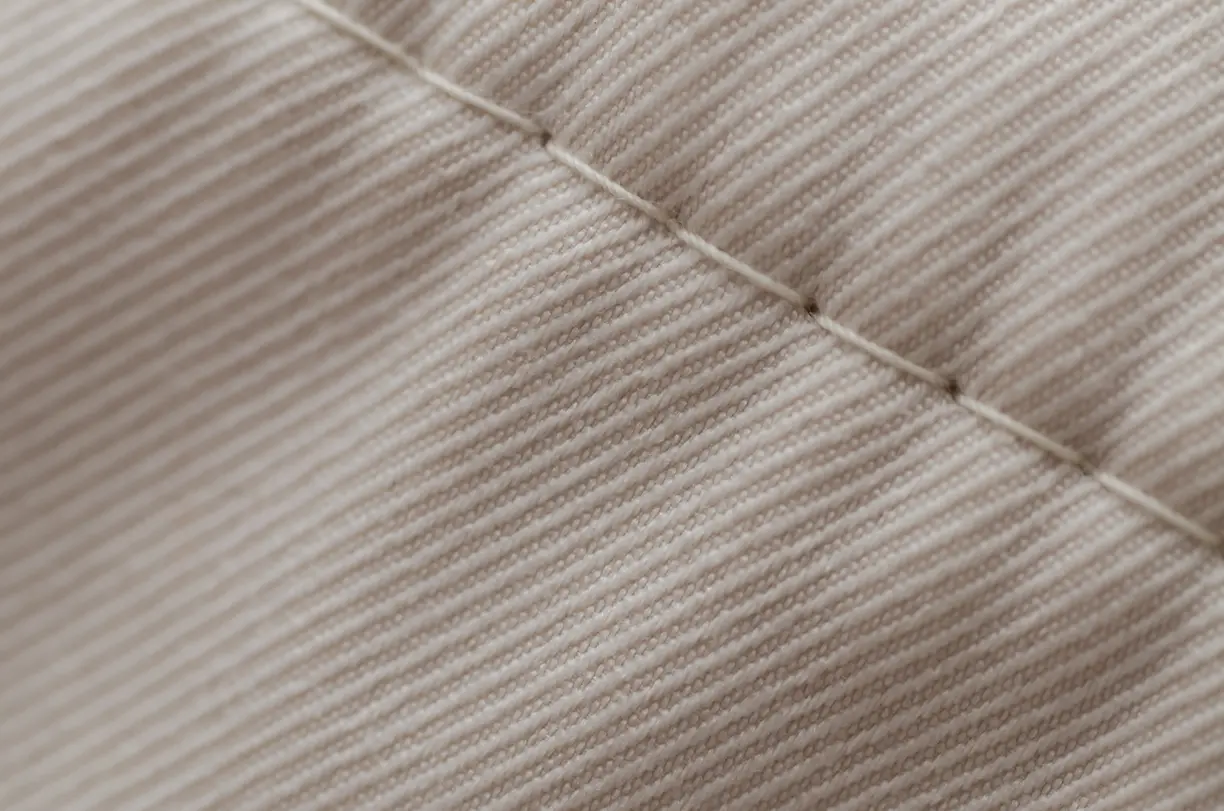
The “extra-long staple” label isn’t marketing fluff; it describes a real, measurable fiber characteristic with real downstream effects on how a garment feels and holds up.
Staple Length: The Core Measurement
Staple length is the average length of individual cotton fibers, and it’s the single biggest driver of yarn quality. Upland cotton typically runs 26–27mm in fiber length, while true extra-long staple varieties like Pima exceed roughly 34.9 mm; some specialty ELS varieties reach well beyond 40mm. That’s not a marginal difference; it changes what the fiber can actually do in a spinning mill.
Why Longer Fibers Change the Fabric
Longer fibers allow a finer, more consistent yarn to be spun, with fewer fiber ends exposed on the yarn’s surface. This shows up in three ways a wearer can actually feel:
- Yarn strength: longer fibers create more contact points along the yarn’s length, producing a stronger yarn than the same weight spun from shorter fibers.
- Pilling resistance: pilling happens when short fiber ends work loose and tangle into little balls on the fabric surface. Fewer exposed fiber ends means dramatically less pilling over the life of the garment.
- Hand feel: the finer yarn achievable from long fibers produces a noticeably softer, smoother, and often slightly lustrous fabric compared to standard Upland cotton at a similar weight.
Micronaire: The Other Number That Matters
Micronaire measures fiber fineness and maturity, essentially, how fine and evenly developed each individual fiber is. A well-managed micronaire range (neither too coarse nor too immature) contributes to dye uptake, fabric uniformity, and the finished hand feel. It’s a secondary factor to staple length, but mills and buyers serious about consistent quality track it alongside fiber length, not instead of it.
Pima vs. Egyptian Cotton: Same Species, Different Geography
Egyptian cotton causes almost as much confusion as Pima does, and for a related reason: several premium long-staple Egyptian varieties also belong to Gossypium barbadense, the same species as Pima. The meaningful difference isn’t fiber biology; it’s growing region, specific cultivar, and, just as with Pima, whether a given garment’s supply chain can actually prove the cotton inside it matches what’s on the label. “Egyptian cotton” suffers from exactly the same substantiation problem this entire article is about, arguably worse, since there’s no single trademark-and-license system as centralized as Supima’s protecting the term internationally.
The Verification Fact Nobody Publishes: Licensees Are Public
Here’s the part that turns this from an interesting fiber-science lesson into something you can actually act on.
Supima licenses several hundred mills, manufacturers, and brands worldwide to use the SUPIMA® trademark, and licensees are not a private list. Real license certificates, the kind issued to individual mills and manufacturers, show a specific license number, an effective date range, and the exact licensed product category, details a licensee should be entirely comfortable sharing, since the certificate itself is designed to be shown to exactly the kind of buyer reading this article. Supima has spent years actively strengthening this verification layer beyond the paperwork alone, partnering with a forensic science firm. Or rather, to test the trace elemental “fingerprint” of raw cotton fiber, the naturally occurring chemical signature left by the specific soil, water, and air of the growing region, against its claimed origin. More recently, Supima rolled out the Aqre platform, a digital, blockchain-based traceability system built with Textile Genesis that tracks licensed product transaction-by-transaction through the supply chain, layering live digital records on top of continued physical, forensic verification.
What this means practically: if a supplier tells you their fabric is Supima, you are entitled to ask for their license number and confirm it’s current and covers the correct product category, not just take the trademark’s presence on a swing tag as sufficient proof. A supplier confident in a genuine Supima claim will produce this without friction, because the entire system exists precisely so they can.
A Supplier Verification Checklist
Before you repeat a Pima or Supima claim anywhere in your own marketing, request:
- The supplier’s Supima license number, if claiming Supima specifically (not just “Pima” generically)
- The license’s effective date range, confirming it’s current, not expired, or from a previous year’s certification cycle
- The licensed product category confirms it actually covers the fabric or garment type you’re purchasing; a license for knit fabrics doesn’t automatically extend to woven goods
- Mill documentation or a transaction certificate tracing the specific lot of fiber or yarn back through the licensed supply chain, where your supplier can provide it
- If claiming plain “Pima” without a Supima license, ask directly where the cotton was grown and what documentation supports that genuine Pima cotton exists outside the Supima licensing system, but without that license, the substantiation burden shifts entirely onto whatever paperwork your supplier can independently produce
Is Supima Worth the Extra Cost?
Here’s the honest answer, not the marketing one: a premium cotton claim only supports a price premium if it can actually be substantiated. The fiber science is real; extra-long staple cotton genuinely produces a stronger, softer, and more pill-resistant fabric than standard Upland cotton, and that’s worth paying for on its own merits.
But the premium on top of the fiber premium, the part customers pay because “Supima” signals verified, traceable, American-grown sourcing, only holds up if you can actually stand behind that claim when asked. Paying Supima-level pricing for cotton you can’t verify gets you the cost without the credibility, which is the worst version of this transaction for a small brand building trust with its own customers.
How to Describe It on Your Product Page Without Overclaiming
Match your product page language to what you can actually prove:
- If you hold a verified Supima license or source from a licensed supplier with documentation: “Made with Supima® cotton” is accurate and defensible, the strongest, most specific claim available.
- If your cotton is genuine Pima but not Supima-licensed: say “Pima cotton” and be prepared to describe your sourcing if asked, but avoid implying you can’t produce Supima-level traceability.
- If you’re unsure and haven’t verified: describe the fabric by its actual measurable qualities, extra-long staple, exceptional softness, and strength, rather than naming Pima or Supima at all. A well-written fabric description built on verifiable characteristics is more defensible than an unverified name-drop.
If you’re building a t-shirt line or exploring private labeling around a premium cotton story, this is exactly the conversation to have with your manufacturer before a single word of copy goes live, not after a customer asks a question you can’t answer.
Ask for the License Number
“Pima” and “Supima” answer two different questions, one about fiber biology and one about a verifiable, licensed supply chain, and conflating them is exactly how small brands end up paying a premium for a claim they can’t defend. The fix isn’t complicated: ask for the license number, confirm it’s current, and describe your fabric at the level of detail you can actually back up.
Sourcing genuinely verifiable premium cotton is part of what we do at Affix Apparel. Learn more about who we are and talk to us about a first run built on cotton you can actually stand behind.
Frequently Asked Questions
What is the difference between Pima and Supima cotton?
Pima refers to the cotton species Gossypium barbadense, an extra-long staple cotton grown in several countries. Supima is a registered trademark licensed specifically to companies sourcing and processing American-grown Pima cotton through a verified, traceable supply chain; not all Pima cotton is Supima-licensed.
Is Supima a brand or a type of cotton?
It’s a trademark, not a botanical type. The underlying fiber is Pima cotton (Gossypium barbadense); Supima is the licensed name and verification system specifically covering American-grown Pima cotton sourced through Supima’s licensed supply chain.
How do I verify a Supima claim?
Ask your supplier for their Supima license number and confirm it covers the correct product category and is currently active. Supima’s licensing program includes forensic origin testing and a digital, blockchain-based traceability platform, so a genuine licensee should be able to substantiate the claim with real documentation.
Is Pima cotton worth the extra cost?
The fiber science supports it, extra-long staple cotton produces stronger, softer, more pill-resistant fabric than standard Upland cotton. Whether the additional premium for a verified Supima claim specifically is worth it depends on whether you can substantiate that claim to your own customers with real supplier documentation.
What is extra-long staple cotton?
Extra-long staple (ELS) cotton refers to cotton with unusually long individual fibers, generally exceeding roughly 34.9mm, compared to about 26–27mm for standard Upland cotton. The longer fiber allows finer, stronger yarn with better pilling resistance and a softer hand feel. Pima and certain Egyptian cotton varieties are the most commonly cited examples.


