

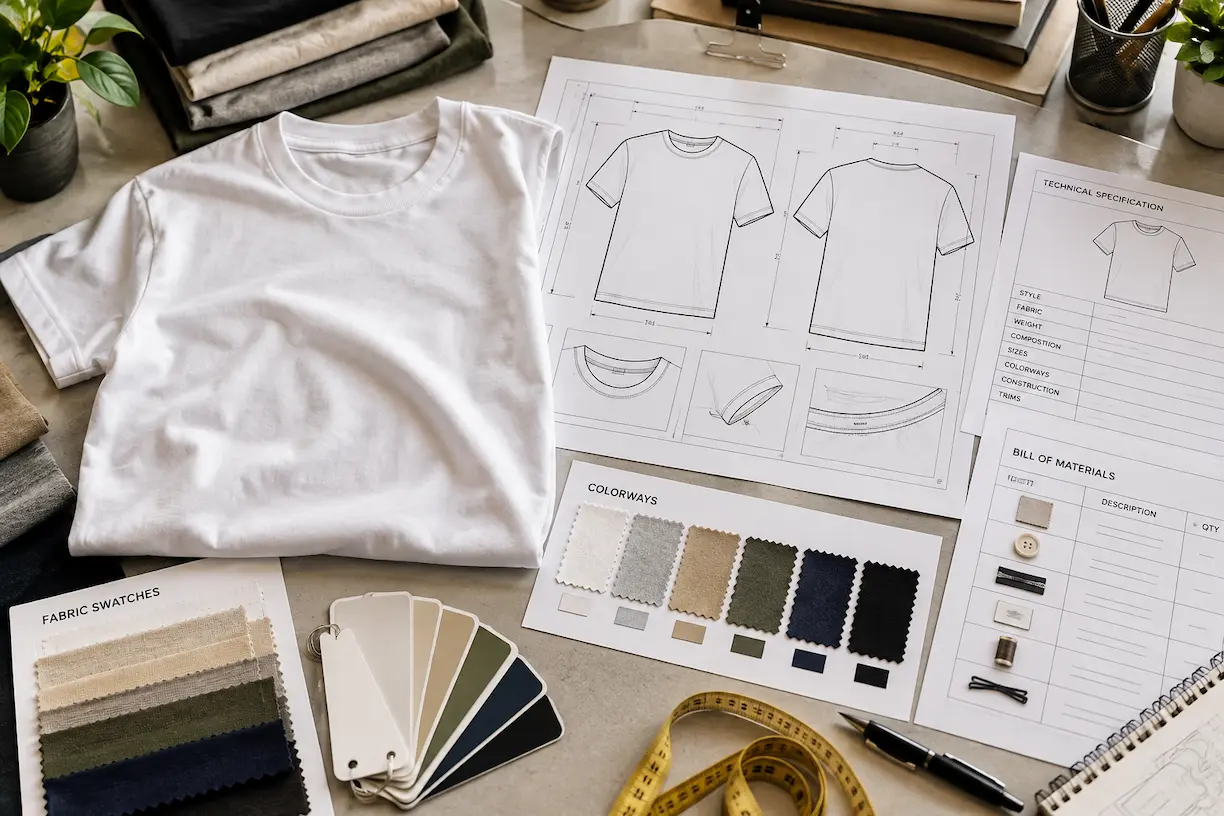
A manufacturer can’t quote a mood board, but it also doesn’t need a full tech pack to give you a rough price. Quoting needs a flat sketch or reference garment, a fabric direction, approximate measurements, a quantity, and your colorways. Sampling needs the real document: a tech pack with points of measure, tolerances, a bill of materials, and construction callouts. Bulk needs a signed, sealed sample and approved artwork. A reference garment can anchor a quote and a construction direction, but it can’t replace a documented spec, and sending one of a protected design carries its own IP risk worth understanding before you do it.
Why Most Tech Pack Advice Online Isn’t Actually Neutral
Search “tech pack,” and almost everything you find is selling you something, a software platform with a free trial or a service that will build one for you for a fee. Neither of those sources has much reason to tell you the honest version: that you often don’t need a tech pack at all to get a first quote and that a tech pack service is sometimes a genuine unnecessary expense for a founder who could put together a minimum-viable spec themselves. Affix doesn’t sell tech packs. That’s exactly why this can be the straight answer: here’s the real minimum, here’s what a reference garment can stand in for, and here’s the one document you genuinely can’t skip once you’re sampling.
Stage One: What Gets You a Quote

A factory giving you a rough price range doesn’t need a finished production document. It needs enough to estimate fabric cost, labor complexity, and rough yardage, which is a shorter list than most founders assume.
A flat sketch or a reference garment. Either works. A flat sketch is a simple technical line drawing of the garment from front and back; it doesn’t need to be pretty, just clear. A reference garment is an actual existing piece whose silhouette and construction you want closely followed (more on exactly what this can and can’t do below).
Fabric direction. Not a finalized fabric, just a direction: “midweight cotton jersey, around 180-200 gsm” tells a factory far more than “soft cotton,” and it’s a sentence most founders can write without any technical background at all.
Approximate measurements. One size’s rough dimensions, chest length, and key points are enough at this stage. Exact tolerances come later.
Quantity. Your realistic target unit count, since price moves meaningfully with volume.
Colorways. How many colors, roughly, does this affect minimums and dye-lot planning even before a single swatch gets chosen?
Five things. None of them require software, a designer, or a paid service. A founder who sends exactly this list, instead of a mood board and a feeling, will get a real quote back far more often and far faster.
Stage Two: What Gets You a Sample That’s Actually Right
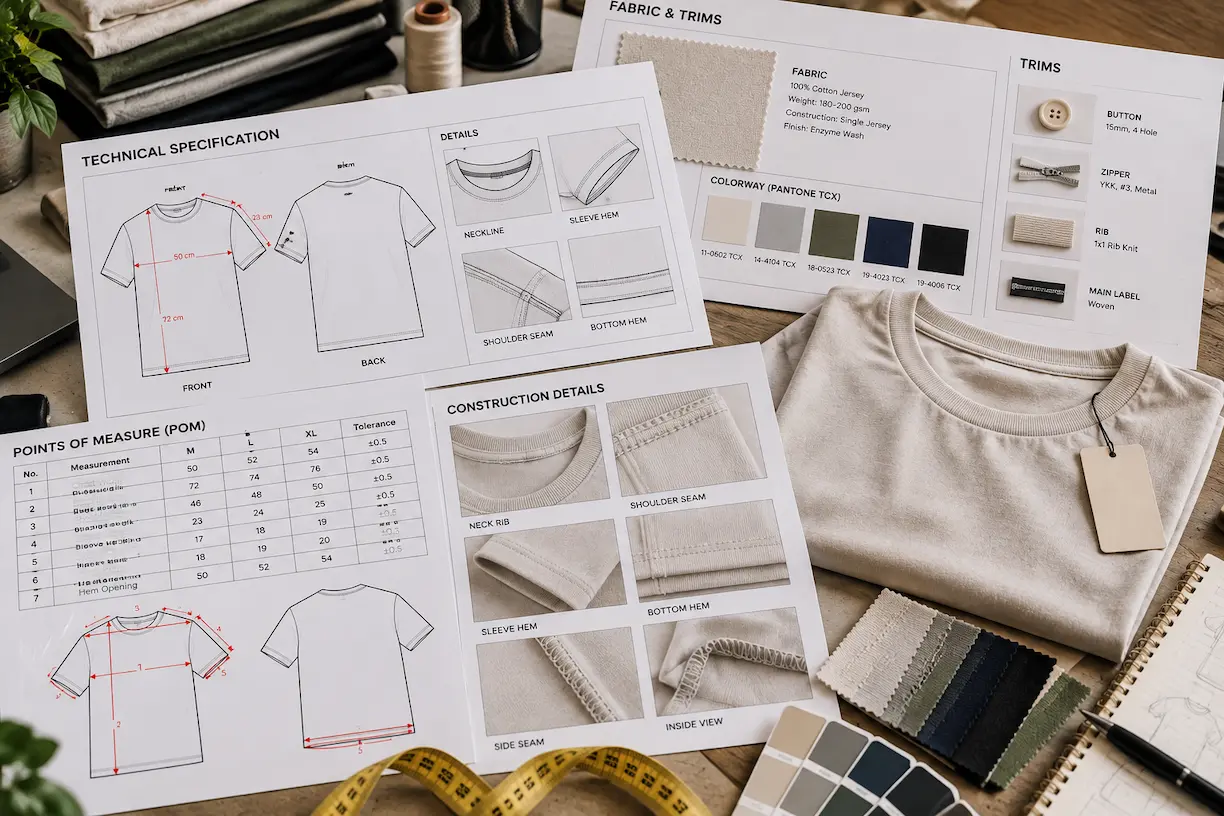
This is where the real tech pack earns its place, and where skipping it is what produces the “I sent a brief, and the sample is wrong” complaint. A sample built from a quoting-stage brief is a sample built on a factory’s own assumptions filling in everything you didn’t specify, and those assumptions become your sample.
Points of measure (POM), with tolerance. Every key measurement, chest width, body length, sleeve length, and hem opening, stated as a target number, not a range you’re hoping for. And each one needs a stated tolerance: how much deviation is acceptable, commonly around a quarter to half an inch depending on the measurement point. “Chest 22 inches” with no tolerance leaves a factory’s own judgment of “close enough” as the only real standard in play.
Bill of materials. Every fabric and trim in the garment is listed with enough specificity that nobody’s guessing: fiber content, weight, the zipper’s exact size and finish, and the drawcord’s length. “Cotton” and “zipper” as your only two line items isn’t a usable BOM.
Construction callouts. How the garment is actually built, seam types, stitch types, reinforcement at stress points, and any specific finishing technique. Left unspecified, a factory defaults to its own standard construction, which may not match what you pictured at all.
Colorway specified by Pantone TCX, not by name. This is the single most common, most avoidable failure in this entire process. “Sage green” means something different to every person who reads it, and it means something different again to a dye house working from a screen’s interpretation of that phrase. A Pantone TCX code is a specific, universal color reference; send that number instead of a color name, and the shade that comes back in bulk is the shade you actually approved, not a factory’s best guess at what “sage” meant to you.
The Reference Garment Route, Done Properly
A reference garment, an actual piece you already own or can source whose fit and construction you want closely followed, is a genuinely useful shortcut, and it’s underused by founders who don’t realize it’s an option at all.
Here’s what it can substitute for: a factory can often assess a reference garment directly for its approximate construction, fabric weight, and general silhouette, which is frequently enough to produce a workable rough quote without a flat sketch or formal measurements at all. It’s a faster, cheaper path into the quoting stage than building documentation from scratch.
Here’s what it can’t substitute for: a reference garment is not a tech pack, and it won’t produce an accurate sample on its own. A factory working from a reference garment alone is still filling gaps with its own judgment, the same problem as a vague written brief, just in physical form instead of words. Once you move to sampling, you still need the documented spec described above, built around what the reference garment showed you was possible.
Send it properly. Mail the actual physical garment where you can; rather than only photos, a factory can measure a real garment far more accurately than it can estimate one from images. If you’re requesting it back, say so clearly up front, and consider asking for a counter sample, a second copy of whatever sample gets built from it, kept independently by you, so there’s no dispute later over which garment was actually the reference.
The IP caution that matters here. This is worth being direct about: sending a factory a reference garment that’s a protected, branded design, a well-known label’s signature silhouette, a trademarked logo, or a design actively sold by someone else carries real intellectual property risk for you and potentially for the factory producing it. “Inspired by” isn’t automatically a safe line, and a reference garment should genuinely be a reference for fit, construction, and category, not a copy target for a design that belongs to someone else. If you’re working from apparel customization with a reference garment in hand, make sure what you’re sending is yours to iterate on, not someone else’s finished product.
Stage Three: What Gets You to Bulk
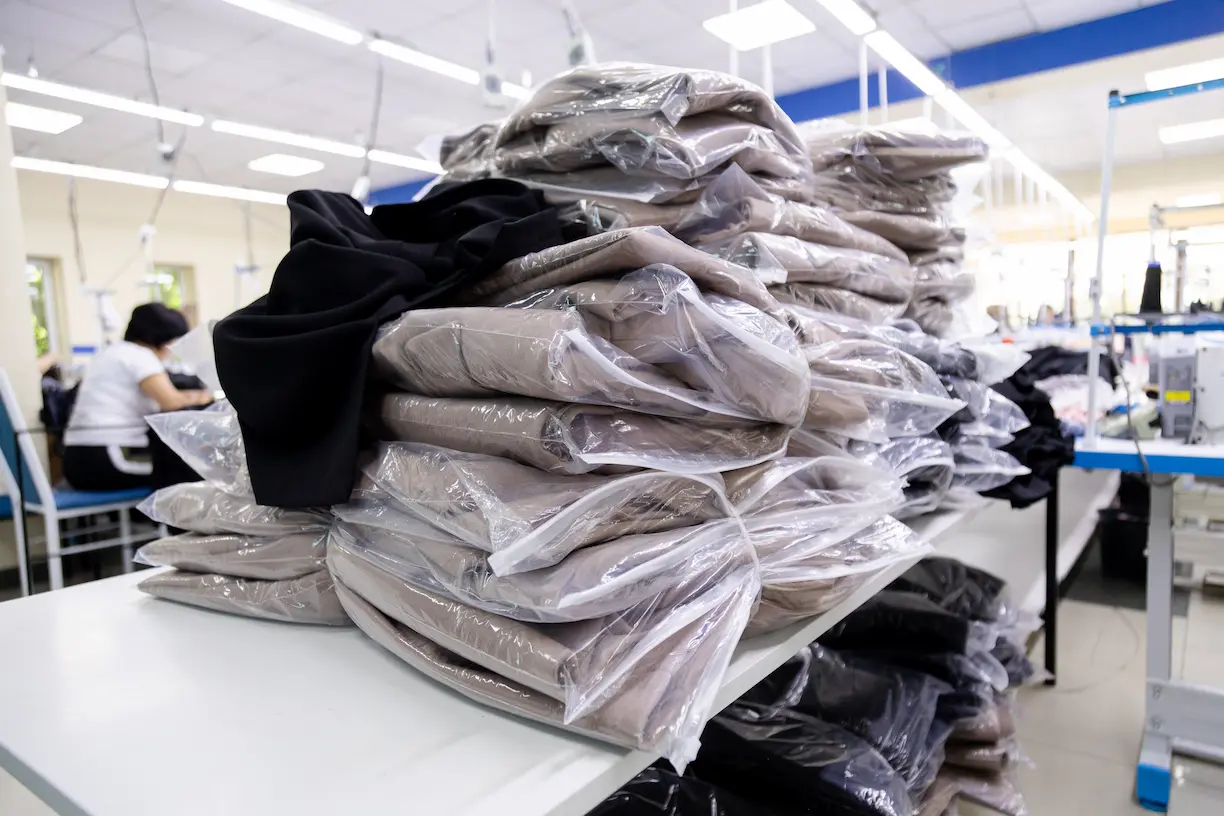
Once a sample is approved, one more document matters before bulk cutting starts, and it’s physical, not digital.
A sealed sample. The approved sample, signed and dated by both you and the factory, is kept as the literal reference standard; every finished unit in the bulk run gets checked against. A verbal “looks good, go ahead” creates nothing to point back to if the bulk comes back different. A sealed sample is the object that makes “it doesn’t match what I approved” an enforceable statement instead of a feeling.
Approved artwork, with exact placement. For anything printed or embroidered, placement needs to be specified from a fixed reference point, measured down from the shoulder seam, say, not described as “centered,” which different operators on a production line will interpret differently from one unit to the next. This is one of the more common, more avoidable causes of inconsistent-looking bulk runs.
A Minimum-Viable Spec You Can Actually Use
Here’s a template that covers the quoting stage and most of what sampling needs, condensed into something you can fill in today without a design background.
For a quote:
- Flat sketch or reference garment: [attach]
- Fabric direction: [fiber content, approximate weight]
- Approximate measurements (one size): chest ___, length ___, sleeve ___
- Target quantity: ___
- Colorways: ___ (number and rough direction)
For sampling, add:
- Full POM chart with tolerance at each point
- BOM: fabric (spec + supplier if known), every trim (size, color, finish)
- Construction notes: seam type, stitch type, any special finishing
- Color: Pantone TCX code, not a color name
- Artwork: placement measured from a fixed reference point, scale, and decoration method
Fill in the first section, and you have what most factories need for a real quote. Fill in the second, and you’ve removed almost every gap that produces a sample that doesn’t match. what you had in mind. From there, our cut-and-sew team can take it from spec to sealed sample to bulk, and if anything here still feels unclear for your specific garment, our FAQs page covers most of the follow-up questions this raises.
One more thing worth saying plainly: none of this needs to arrive polished. A factory used to working with first-time founders doesn’t expect a CAD-perfect flat sketch or industry-standard formatting; it expects clarity. A hand-drawn sketch with honest measurements and a Pantone number beats a beautiful mood board with none of that information, every time. The goal isn’t to look like you already know the industry. It’s to give a factory something specific enough to act on, at whichever stage you’re actually at.
Why This Matters More Than It Seems To

It’s tempting to treat all of this as paperwork, a formality standing between an idea and a finished garment. It isn’t. Every gap left in a quoting brief or a sampling document gets filled by someone else’s judgment, and that judgment is rarely wrong on purpose. It’s just not yours. A factory interpreting “soft cotton” as a 220 gsm interlock instead of the 180 gsm jersey you pictured isn’t making a mistake; it’s making a reasonable choice from information that didn’t rule it out. The documents in this guide exist to remove exactly that kind of silent substitution, one decision at a time, so that what gets produced is actually the thing you asked for.
Frequently Asked Questions
Do I need a tech pack to get a quote?
No. A flat sketch or reference garment, a fabric direction, rough measurements, a target quantity, and your colorways are usually enough for a workable rough quote. A full tech pack becomes necessary once you move to sampling, not before.
Can a factory copy a garment I send them?
A reference garment is meant to guide fit and construction, not serve as a copy target for a protected design. Sending a branded or trademarked piece for direct replication carries real IP risk for both you and the factory producing it: keep the reference to category, fit, and general construction, not a finished design that belongs to someone else.
What is a point of measure?
A point of measure (POM) is a specific, named measurement on a garment, such as chest width, body length, sleeve length, and similar, given as a target number with a stated tolerance. A full POM chart with tolerances is what lets a factory know exactly what “correct” means at every size, rather than guessing at an acceptable range.
How do I specify color to a manufacturer?
By Pantone TCX code, not by name. A color described as “sage green” or “navy” means something different to every person reading it; a Pantone TCX number is a specific, universal reference that removes the guesswork and is the single most effective fix for bulk arriving in a different shade than what was approved.
What is the minimum information a manufacturer needs?
To quote: a flat sketch or reference garment, fabric direction, approximate measurements, quantity, and colorways. To sample accurately: a full tech pack with POM and tolerances, a bill of materials, construction callouts, and Pantone-specified color. Nothing less than the sampling-stage list reliably produces a sample that matches what you actually pictured.


