

Summary
Children’s clothing (designed primarily for ages 12 and under) carries a much heavier legal burden than adult apparel. Under the CPSIA, a manufacturer or importer must have required products tested at a CPSC-accepted laboratory, issue a Children’s Product Certificate, apply permanent tracking labels, and meet rules on flammability, drawstrings, and small parts. Construction choices such as snap strength, hardware, and seams decide whether a garment is safe in use. OEKO-TEX Class I am a valuable baby-skin signal, but it does not replace CPSIA testing or the certificate. This is general information, not legal advice.
Moving From Adult Apparel to Kidswear? The Rules Just Changed
A brand with a good adult line decides to add a kids’ range. Same factory, same fabrics, smaller sizes. Easy.
Then a marketplace pulls the listing because there’s no Children’s Product Certificate. Or a retailer finds garments with no tracking label. Or a parent posts a photo of a snap that came off in a toddler’s mouth.
Kidswear isn’t adult clothing made smaller. In the US, it falls under the Consumer Product Safety Improvement Act (CPSIA), enforced by the Consumer Product Safety Commission (CPSC), and the legal burden is much heavier. The regulations exist, but they’re written as law, not as a production plan. This guide turns them into a workflow: what to test, when, who pays, which documents travel with the goods, and which construction choices keep a garment safe. It’s general information, not legal advice. Check the CPSC’s own guidance and speak to a qualified adviser for your products.
Which Products Count as Children’s Products?
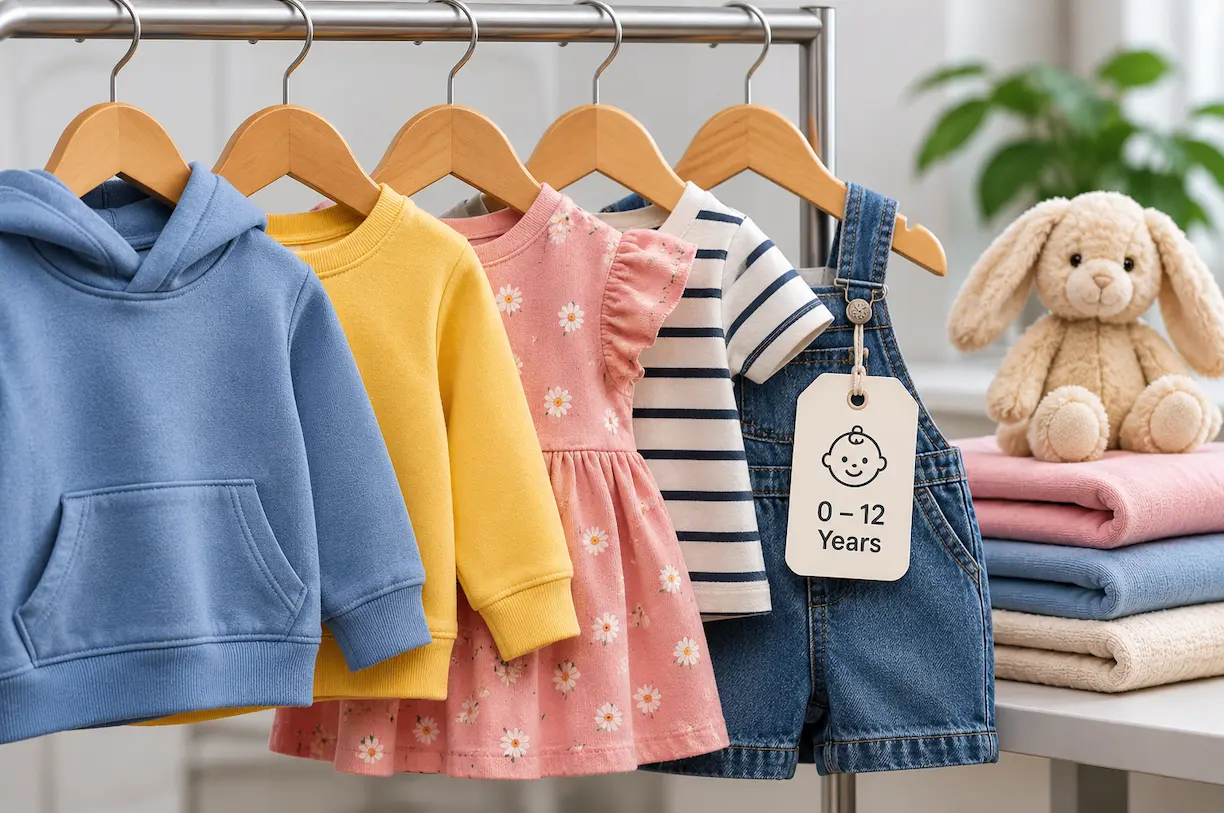
A children’s product is one designed or intended primarily for children 12 years old or younger. The CPSC looks at things like the manufacturer’s stated intent, how the product is labelled and marketed, whether it’s commonly recognised as being for children, and the sizes offered. A “youth” range in sizes 7 to 12 is children’s apparel. Size labels, models, listing copy, and the age range you state all count.
If your range spans adult and children’s sizes, assume the children’s rules apply to the children’s sizes.
The Compliance Workflow at a Glance
| Stage | What happens | Who is responsible? |
| 1. Design | Choose fabrics, trims, hardware, and decoration with the rules in mind. | Brand with manufacturer |
| 2. Component check | Identify which parts need testing (hardware, prints, coatings). | Brand and manufacturer |
| 3. Testing | Required tests at a CPSC-accepted laboratory | Manufacturer or importer |
| 4. Certificate | Issue the Children’s Product Certificate | Manufacturer or importer |
| 5. Labelling | Permanent tracking label on product and packaging | Brand and manufacturer |
| 6. Shipment | The certificate accompanies the goods and is available on request. | Importer or domestic manufacturer |
The cost of testing generally falls to the manufacturer or importer who issues the certificate. In a private label arrangement, that is usually the brand, so decide up front who arranges and pays for tests and make sure it’s written into the agreement.
Step One: Testing at a CPSC-Accepted Laboratory
Required third-party testing must be carried out by a CPSC-accepted laboratory, and the CPSC publishes a searchable list of them. A test from any lab not on that list doesn’t satisfy the requirement.
What gets tested depends on the garment:
- Lead content. Children’s products must not exceed the federal limit for lead in accessible substrate (100 ppm). Lead testing children’s clothes matters most for metal parts: snaps, zip pulls, eyelets, buttons, and rivets. Many plain textiles are determined by the CPSC not to exceed lead limits, but that determination doesn’t extend to some applied decoration, so check the current rule.
- Lead in paint and surface coatings. Limits (90 ppm) apply to paints and coatings, including painted hardware and some prints.
- Phthalates. The federal phthalate limits apply to children’s toys and child care articles. Ordinary clothing generally isn’t covered, but items with plastic parts or soft plastic prints may need review depending on how they’re used. Confirm with the CPSC before assuming.
- Flammability. Children’s apparel must meet the general clothing flammability standard, 16 CFR 1610. Sleepwear is a separate, stricter category, so if you’re making pajamas, read the sleepwear rules before you design.
Testing is done on the finished product or its components, and a new test is generally required if materials or suppliers change. Keep every report.
Step Two: The Children’s Product Certificate
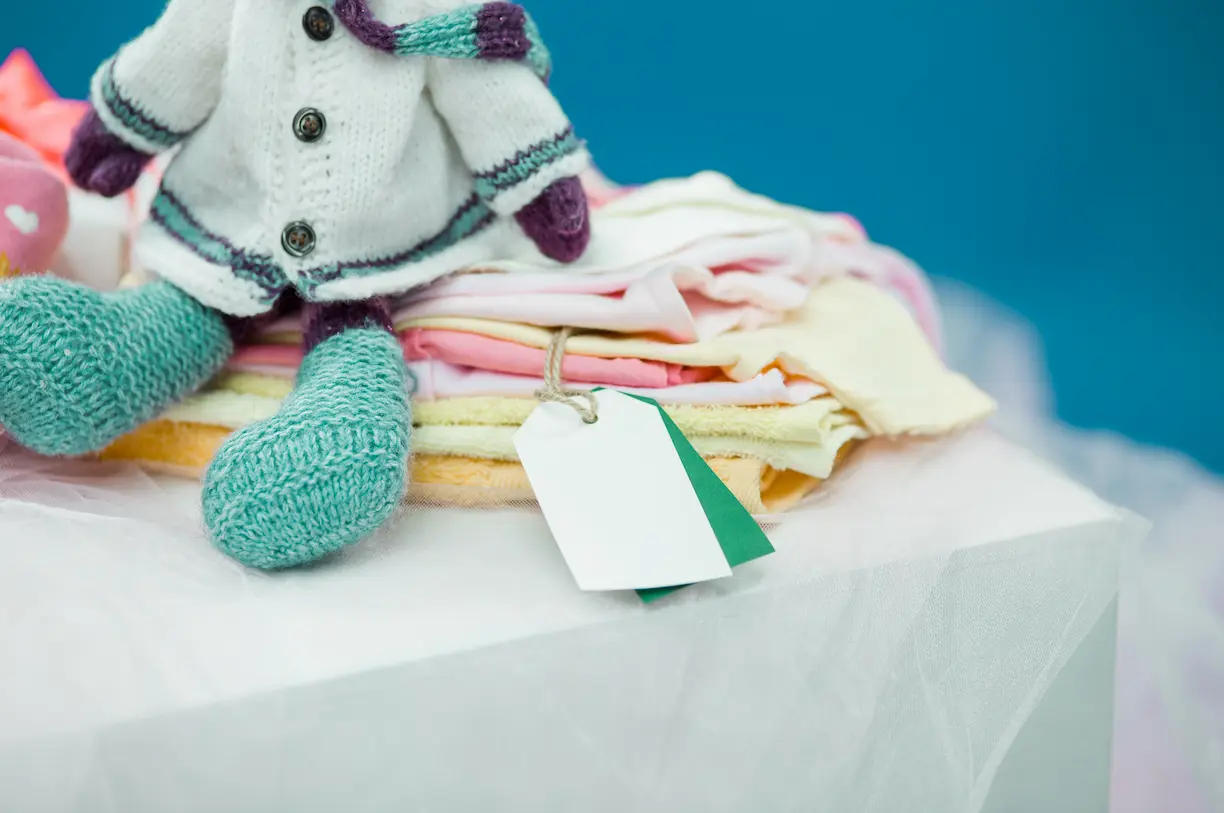
A Children’s Product Certificate (CPC) is a document issued by the manufacturer or importer certifying that the product complies with all applicable safety rules, based on passing test results. Without it, a listing can be pulled and goods can be held.
A CPC includes:
- Identification of the product
- A list of each safety rule the product is certified to
- Identification of the manufacturer or importer issuing the certificate
- A contact person’s details
- The date and place where the product was manufactured
- The date and place where it was tested
- The identification of the CPSC-accepted laboratory
The certificate must accompany the shipment, be available to retailers and the CPSC, and be kept on file. It can be electronic. If you work with a distributor or retailer, expect them to ask for it before they stock your product.
Step Three: Permanent Tracking Labels
Children’s products must carry a permanent tracking label so that a product can be traced if a problem arises. It generally identifies the manufacturer or private labeler, the location and date of production, and information on the batch or run, such as a batch number.
Practical points:
- Permanent means it stays on and legible for the life of the garment. Stitched labels or durable prints work; paper stickers do not.
- It’s separate from the fiber content and care labeling that apply to all US apparel.
- It must be applied to the product and its packaging where practicable.
A missing tracking label is among the most common reasons kids’ goods get stopped. It’s cheap to add at the label stage and expensive to fix after production. If you’re putting a private label together, our private labeling service builds tracking information into label design from the start.
Drawstrings: ASTM F1816 and the CPSC Position
Drawstrings are one of the most scrutinized features in kidswear because they can catch on playground equipment, buses, and doors. The CPSC treats drawstrings at the hood or neck of children’s upper outerwear (in sizes 2T to 12) as a substantial hazard and has guidelines for other drawstrings and cords. ASTM F1816 is the voluntary safety specification for drawstrings on children’s upper outerwear.
The safest design choices are well known:
- No drawstrings at the hood or neck in children’s sizes.
- Waist and hem drawstrings only within the length and attachment limits in the guidance, and with no toggles that can catch.
- Alternatives such as elastic, snaps, hook-and-loop, or flat stitched-in cords that can’t be pulled free.
Check the current CPSC guidance for exact limits by age and garment type. The drawstring standard for children’s apparel is one of the first things a retailer’s compliance team checks.
Construction: Where Real Safety Is Decided
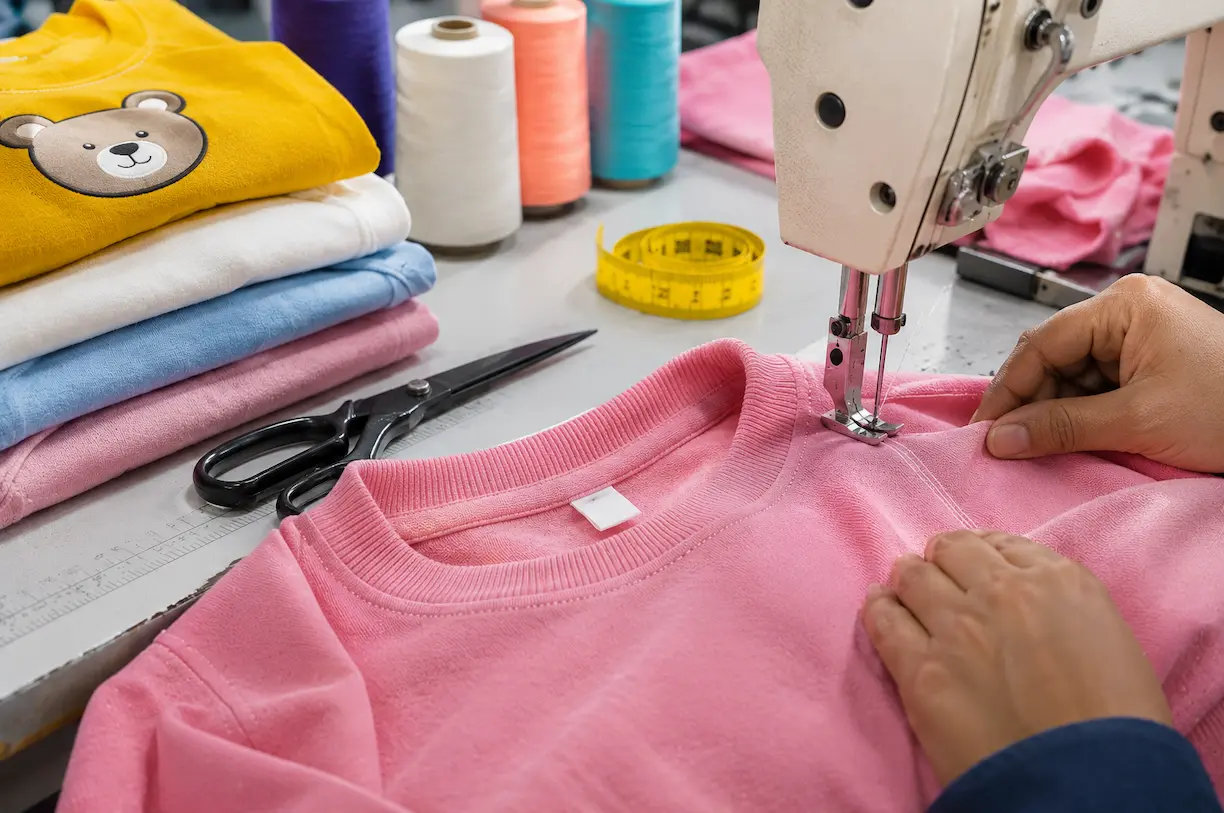
Compliance on paper isn’t enough. Parents’ complaints centre on construction, and some of it is also a legal matter.
Snaps. A detached snap is a choking hazard, particularly for babies and toddlers. Small parts rules restrict parts that fit inside a small-parts test cylinder in products for children under three, and snaps must withstand use-and-abuse testing, including a snap pull test, so they don’t separate. Use quality snaps, set them correctly on sufficient fabric, reinforce the application area, and verify with pull tests on production samples. Ask your supplier or lab for the pull-test method and the pass level that applies to your age range.
Hardware. Choose nickel-free hardware. There’s no single US federal nickel rule for apparel, but nickel causes skin reactions, and the EU restricts it, so it’s good practice, particularly for hardware that touches skin.
Seams. Flatlock seams sit flat against the skin, which reduces chafing on babies and sensory-sensitive children. They also tend to resist abrasion.
Labels. Tagless printed labels avoid scratchy neck tags, provided they carry the required information permanently and survive washing. Check our guide to labels if you’re considering this route.
Dyes and skin. Skin reactions often trace to dye chemistry or finishing residues. That’s where OEKO-TEX comes in.
Where OEKO-TEX Class I Fits (and Where It Doesn’t)
OEKO-TEX Standard 100 certifies that textiles have been tested for harmful substances. It has four product classes, and Class I is the strictest, for products used by babies and toddlers up to age three. It sets tight limits on substances such as certain dyes, formaldehyde, and heavy metals, and it’s a strong signal for parents worried about sensitive skin.
Our baby clothing manufacturer range is built with that in mind.
But the point that matters most: OEKO-TEX is a voluntary certification. It does not replace CPSIA testing, and it is not a Children’s Product Certificate. CPSIA obligations are legal requirements, with their own tests, lab requirements, and documentation. Use OEKO-TEX as an additional layer of confidence about fabric chemistry. It doesn’t cover tracking labels, drawstrings, snaps or flammability, and it isn’t accepted in place of a CPC.
Pre-Production Checklist for Kids’ Garments
- Confirm the garment is a children’s product and sized accordingly
- Choose fabrics, trims, and hardware before sampling, with testing in mind
- Decide who arranges and pays for third-party testing, in writing
- Use a CPSC-accepted laboratory and keep the reports
- Test metal hardware and applied prints for lead; confirm other requirements
- Meet the flammability standard (16 CFR 1610, or the sleepwear rules for nightwear)
- No hood or neck drawstrings; check other drawstrings against current guidance
- Snaps pull-tested on production samples; hardware nickel-free
- Permanent tracking label on garment and packaging
- Standard fiber content, care, and origin labeling in place
- Children’s Product Certificate issued, accompanying the shipment and on file
- Wash-test the sample so label and care claims are supported
Conclusion: Build the Paperwork Into the Product
Kidswear compliance isn’t a final hurdle. It’s a thread running from design to shipment. Choose hardware and drawstring designs that reduce risk, test the right parts at the right laboratory, issue the certificate, label permanently, and keep the records. Brands that move from adult apparel and treat it as an extra step at the end are the ones who find listings pulled and shipments held.
Used properly, compliance is also an advantage, and it’s central to how we work, as our who we are page explains. Parents choose brands they trust, and retailers choose brands that arrive with their paperwork in order. This article is general information, not legal advice. For your own products, check CPSC guidance directly and speak to a qualified adviser.
Frequently Asked Questions
What testing is required for children’s clothing in the USA?
Required third-party testing at a CPSC-accepted laboratory depends on the garment’s materials and parts. It commonly covers lead in components such as metal hardware and applied coatings, plus flammability under 16 CFR 1610, with other tests for sleepwear and certain features. Confirm the list for your product with the CPSC.
What is a Children’s Product Certificate?
A document issued by the manufacturer or importer certifying that a children’s product meets all applicable safety rules, based on third-party test results. It names the product, the rules, the testing lab, and where and when it was made and tested, and must accompany the shipment.
Do kids’ clothes need a tracking label?
Yes. Children’s products must carry permanent tracking information identifying the manufacturer or private labeler, location and date of production, and batch details on the product and, where practicable, its packaging.
Are drawstrings allowed on children’s clothing?
Not at the hood or neck of upper outerwear in children’s sizes. Other drawstrings, such as waist or hem cords, are limited by length and attachment guidance. Check the current CPSC guidance and ASTM F1816.
Does OEKO-TEX satisfy CPSIA?
No. OEKO-TEX is a voluntary certification of fabric safety. It doesn’t replace CPSIA third-party testing or the Children’s Product Certificate, though it can complement them.


